A clean roofline after a heavy snowfall tells you a lot about a house. It means heat is staying where it belongs, meltwater is moving off the shingles, and the owners won’t be calling for emergency help when the temperature swings. Ice dams form when that balance breaks, and once you’ve seen the damage a solid ridge of ice can cause, you stop treating winter as a passive season. The good news: most ice dams can be prevented with a mix of building science, routine maintenance, and a little discipline after storms.
I’ve worked on homes from Minnesota to Maine and watched ice dams ruin ceilings, buckle asphalt shingles, and saturate wall cavities. I’ve also seen simple changes keep roofs bone-dry through brutal cold snaps. This guide brings the field lessons together, so you understand what’s happening up there and how to get through winter without the telltale water stain creeping across the dining room ceiling.
What an Ice Dam Really Is
An ice dam is a ridge of refrozen meltwater along the eaves. Warm air sneaks into the attic and warms the underside of the roof deck. Snow on the upper roof melts. Liquid water trickles down to the colder eave overhang, which extends beyond the conditioned space. There, it refreezes. That ridge grows with each thaw-freeze cycle until it traps a pool of water uphill. Shingles are not a watertight membrane, so the pooled water slips under them and into the house.
You’ll see the early signs from the ground. The roof looks patchy, with bare sections higher up and a fat band of icicles hanging at the gutters. Shaded north slopes and valleys ice first. Heat loss from bath fans, can lights, and around chimneys often creates the distinctive “melt channel” pattern. When the ceiling stains show up, the dam has been working for days.
Why Ice Dams Form: Not Just “Cold Weather”
Three ingredients create dams: heat loss, air leaks, and poor drainage. Cold weather only sets the stage.
Attic heat drives most of the melting. Even a few degrees above freezing at the roof deck is enough to start the cycle. I’ve seen “insulated” attics with a fluffy R-38 blanket perform worse than a leaner R-30 one because of uncontrolled air leaks. Warm, moist house air bypassed the insulation through unsealed gaps at top plates, electrical penetrations, and attic hatches. That air brings both heat and moisture, which warms the roof deck and can also frost the underside of the sheathing.
Ventilation only works if insulation and air sealing already do their job. A cold, evenly ventilated attic lets the roof deck stay near ambient outdoor temperature. When soffit intake and ridge exhaust are balanced, air moves steadily and sweeps away incidental heat that sneaks in. If soffit vents are blocked by insulation or bird nests, the system stalls. Venting the attic without stopping indoor air leakage is like opening car windows while the heater is stuck on high. You move some air, but you don’t fix the root cause.
Drainage matters, too. A heavy snow followed by a slight warmup can overwhelm a roof with marginal slope or cluttered valleys. Gutters packed with leaves, poorly pitched leaders, and short downspout extensions force meltwater to back up and refreeze at the edge.
A Quick Reality Check on Roof Types and Risk
Not every roof behaves the same. Low-slope roofs between 2/12 and 4/12 pitch are vulnerable because water sheds slowly and ice creep has more time to work under shingles. Steeper roofs shed snow more readily, but deep valleys, dormers, and step transitions create natural catch points. Metal roofs generally ice less because the surface sheds snow quickly, but the overhangs still freeze and create spectacular icicle arrays if heat leaks persist underneath. Cathedral ceilings, where the rafter bays are packed with insulation and ventilation pathways are narrow, demand meticulous detailing or they’ll melt snow even in light cold.
Historic homes in the Northeast often have wide eaves and charming nooks that hide air leaks. Modern homes can have the opposite issue: tight but poorly ventilated attics if soffit vents are undersized relative to ridge length. No matter the style, the principles hold. Keep the roof deck cold, let air move, and give meltwater a clear path away from the building.
The Prevention Playbook: Priorities That Actually Work
If you want to prevent ice dams on roof edges reliably, start by controlling heat loss. Everything else supports that goal. I tell homeowners to approach it like triage: seal, insulate, ventilate, then manage snow and water.
Air Sealing, the Unseen Hero
Air sealing beats raw R-value almost every time. Warm air finds the path of least resistance, and once it flows into the attic, the temperature of the roof deck climbs. The usual trouble spots repeat house after house. Top plates of interior walls, wire and pipe penetrations, bath fan housings, the attic hatch, and the chimney chase. I carry rigid foam, foil tape, high-temp silicone, and plenty of fire-rated foam for this work. You can DIY the obvious gaps, but chasing everything takes patience and a keen eye. In a typical 1,800 square foot house, we often close 30 to 60 distinct penetrations.
Few details deliver like an airtight attic hatch. Many are just a plywood lid that sits on a trim lip. Add weatherstripping, spring latches, and an insulated lid at least R-10, and you’ll feel the difference during the next cold snap. For recessed lights that abut the attic, replace non-IC fixtures or build airtight covers designed for them. Sealing a bath fan duct is another quiet win. Rigid or smooth-walled duct, straight runs to a proper roof cap with a damper, and a sealed boot at the ceiling keep warm, moist air from dumping into the attic.
Insulation That Keeps a Roof Cold
Once the leaks are under control, insulation can do its job: keep indoor heat from reaching the roof deck. In cold climates, attics perform well with blown cellulose or loose-fill fiberglass to R-49 or better, which is roughly 14 to 16 inches depending on material and density. The key is consistency. Thin spots around the perimeter invite melt lines. I like to install raised baffles at the eaves so we can carry full-depth insulation to the outer edge without blocking the soffit intake. Baffles also create a defined air channel that supports ventilation.
Cathedral ceilings complicate things. There isn’t always room for both a proper ventilation channel and enough insulation. You can use site-built baffles to preserve at least a 1 to 2 inch air gap, then dense-pack cellulose or install high-density batts below. In deep retrofits, I’ve added a rigid foam layer above the roof deck during a reroof to raise the total R-value while keeping the deck warm enough to avoid interior condensation and cold enough to avoid snow melt on top. That approach takes a roofing contractor with experience in roof snow removal over-deck insulation and is best planned in the off season.
Ventilation That Actually Works
Ventilation should be balanced: roughly equal net free area at the soffits and at the ridge. Too much exhaust without intake pulls heated air from the house, which backfires. Too much intake with no clear path out just creates stagnant cold pockets. I’ve measured plenty of “ventilated” attics where the soffits were covered by insulation or painted shut decades ago. A quick inspection with a flashlight and a look behind the fascia can tell you whether air can travel. If you can’t see daylight through the baffles, air probably isn’t getting in.
On gable roofs with short ridges, continuous ridge vent still helps, but you may rely partly on high gable vents paired with open soffits. Power vents promise active airflow, but they can depressurize an attic and suck conditioned air from the house unless the air sealing is very good. Used judiciously on large, complicated roofs, they’re a tool, not a cure.
Manage Water Where It Matters
Even a well detailed attic benefits from exterior housekeeping. Keep gutters clear before winter. Aim for a slight pitch to the downspouts and extend them at least 6 feet from the foundation to prevent recycled meltwater from freezing at the eaves. If you have chronic valley ice, consider a diverter or an oversized, high-flow valley flashing during the next reroof. Ice and water shield underlayment, installed from the eaves to at least 24 inches past the interior warm wall line and in valleys, buys time when weather beats the odds. It doesn’t prevent dams, but it helps keep a nuisance from becoming a ceiling collapse.
The Role of Snow: When to Rake and When to Relax
Most roofs tolerate a few inches of snow without issue. Risk climbs with depth, temperature swings, sun exposure, and roof design. After a storm, if the forecast calls for a quick warmup or if your home has a history of ice damming, a roof rake can be the cheapest insurance you own. Pulling the first 3 to 4 feet of snow off the eaves lowers the chance of refreeze at the edge. Use a rake from the ground. Stand clear of falling snow and ice. Work in shallow passes so you don’t snag shingles. There’s no need to strip the roof clean; you’re managing the critical zone, not grooming a ski run.
Skip the metal shovels, hammers, and chisels. I’ve repaired too many roofs scarred by good intentions. If the snow is wet and heavy, pay attention to load. Deep drifts in valleys can exceed design limits, especially on older homes or those with additions. In those rare cases, a professional crew that uses soft tools and safety gear is worth every penny.
Heat Cables and Other Add‑Ons: Where They Fit
Heat cables have their place, usually as a tactical fix on stubborn architectural details. The principle is simple: create a melt channel through the ice so water can escape. Installed correctly, they zigzag near the eaves and run along gutters and downspouts. Controlled by a thermostat that activates in the right temperature range, they help manage occasional trouble spots. They do not substitute for air sealing and insulation. Run them constantly, and you pay for the electricity while masking a problem that will show up in another form.
Roof coatings billed as “ice dam prevention” rarely solve anything. Dark shingles that absorb sunlight can worsen melt on clear days but help dry the roof after storms. The best long-term fix remains a cold roof assembly and predictable water paths off the building.
When You Already Have an Ice Dam
If water is coming in, your first priority is safety. Move what you can out of harm’s way. Puncture ceiling bubbles with a screwdriver to relieve pressure and prevent a sudden burst. Catch water in bins. Then look outside to understand the extent of the dam. If only the eave edge is iced and no water has entered the house, you may get relief by raking off a affordable roof ice dam removal few feet of snow and placing cloth tubes or socks filled with calcium chloride across the dam to carve small channels. Use calcium chloride, not rock salt, which can corrode metal and stain siding. Be patient; it melts slowly.
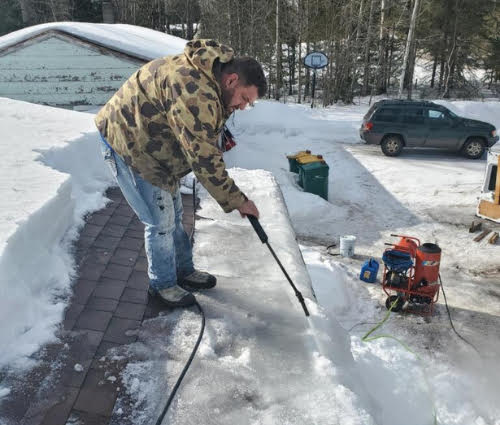
When the dam is large, the temperature is swinging, and interior leaks have started, call a reputable ice dam removal service. Professional ice dam removal relies on low-pressure steam to cut and lift ice without shredding shingles. High-pressure washers and picks shred granules and shorten roof life. A good crew works in sections, peels the ice into manageable slabs, and clears the pathways so refreezing doesn’t rebuild the dam overnight. In peak season, search terms like roof ice dam removal or ice dam removal near me will bring up local options. Read reviews and ask what method they use. If they don’t say steam, keep looking.
Emergency ice dam removal isn’t cheap. Depending on location, roof complexity, and severity, expect ice dam removal cost to range from a few hundred dollars for a small section to well over a thousand for a full perimeter. Crews bill by the hour, and access matters. Three-story homes, steep pitches, and brittle old shingles slow everything down. Residential ice dam removal often includes clearing gutters and downspouts so the next thaw doesn’t trap water again.
Steam vs Everything Else
I’ve watched every method in the field. Steam ice dam removal is the safest for the roof surface when done by trained technicians. The steam head weeps heat under the ice, releasing the bond at the shingle interface. It’s slower than smashing through with a pry bar, but it preserves the roof. Roofers sometimes use specialized hot-water machines, but you must keep pressure low. The moment you see granules in the runoff, you’re paying for hidden future leaks.
Salt pellets tossed on the roof look tempting. They leave uneven melt patterns, stain facades, and in some cases kill landscaping. People try to break icicles with a broom or shovel from the ground, which can pull gutters down or drop heavy ice like a spear. If an icicle is big enough to threaten a doorway, knock it down in small pieces with care or block off the entry and wait for a pro.
How Pros Diagnose and Fix the Root Causes
After a removal, reputable contractors will talk prevention. That starts with a careful attic inspection on a cold day. I like to use an infrared camera around sunset when the house has been heated all day and the attic has had time to develop temperature differences. The camera highlights warm streaks where air is leaking. I’ll mark those spots, then crawl the attic with headlamp and gloves to open insulation and seal gaps. The work is dusty but straightforward. A standard, leaky 1970s attic usually takes a one to two day push to seal and blow to full depth. Cathedral ceilings demand more invasive approaches and sometimes a plan that spans two seasons: stabilize now, upgrade during the next reroof.
Your roofer’s scope might include adding or unblocking soffit vents, installing continuous ridge vent, and extending ice and water shield when the shingles are replaced. If the house has complicated junctions, a small redesign with saddle flashings or snow diverters can break up chronic ice formation in valleys. None of this is glamorous, and almost all of it is hidden once finished. That’s the point. The best ice dam prevention disappears into a roof that quietly does its job.
Regional Realities and Weather Whiplash
Climate swings cause more trouble than static cold. In the Upper Midwest, you might get a 10 inch snowfall followed by a week of subzero nights and then a sunny 34 degree day. That’s ice dam weather. In coastal New England, heavy wet snow loads gutters and refreezes overnight thanks to ocean-cooled air, then storms back with rain that stacks water behind existing ice. Mountain towns see dramatic sun exposure differences on the same roof. South slopes bake while north slopes hoard powder, which means uneven melt patterns even with good insulation. Adapt your strategy.
If your roof spends half the winter shaded by tall evergreens, treat it as a higher risk. Keep the first four feet near the eave raked after big storms. If your home has big attic volumes, don’t assume they ventilate well just because the space is large. Large bays can sit stagnant, warm at the peak, and cold at the eaves. Balance the intake and exhaust with the actual geometry, not just rules of thumb.
A Short Owner’s Checklist That Pays Off
- Before winter, clear gutters, verify downspout extensions, and check that soffit vents are unobstructed. In the attic, seal obvious air leaks, weatherstrip the hatch, and top up insulation to an even depth. After major storms, rake the first 3 to 4 feet at eaves on chronic trouble sides, especially before a warmup. If dams form anyway, avoid salt granules and chisels. Use calcium chloride socks gently or call a steam crew. Book energy and roofing improvements for shoulder seasons so you’re not scrambling midwinter.
What It Costs to Do It Right
Homeowners ask whether it’s cheaper to live with occasional ice dams and pay for removal. Sometimes, for a mild climate with rare storms, that calculus makes sense. For most cold regions, the numbers favor prevention within a couple of winters. Air sealing and insulation upgrades in a typical home run from 1,500 to 4,000 dollars, depending on access and scope. That work usually trims heating bills by a noticeable margin, often 10 to 20 percent in leaky houses. A single season of repeated emergency ice dam removal can reach 1,000 to 3,000 dollars if you’re unlucky. Roof repairs and interior remediation after a leak push costs into five figures.
When reroofing is already on the horizon, spend the extra on extended ice and water shield, proper ridge venting, and, if needed, a layer of above-deck insulation or venting. Those details add hundreds to a few thousand to a roofing job but reset the roof’s behavior for decades.
Common Myths That Keep Problems Alive
I hear the same refrains year after year. “New windows will stop ice dams.” They won’t. Windows can reduce drafts and overall heating load, but dams care about roof deck temperature and drainage. “Big icicles mean the roof is failing.” Sometimes. Often they mean clogged gutters or a brief melt. “More attic vents will fix it.” Not if the attic leaks warm air. “Metal roofs don’t get ice dams.” They get different ones, and the sliding snow can cause its own hazards. “I’ll just keep the house colder.” Lowering the thermostat helps a little, but it won’t overcome major air leaks or poor roof assembly details.
Planning Ahead: Who to Call and When
If you only react when water shows up, you’ll always be playing defense. Line up two kinds of help before winter: a trustworthy roofing contractor who understands cold-climate assemblies and a reputable ice dam removal service that uses steam. Vet them off-season when they have time to answer questions. Ask about past projects with similar roof types. For energy fixes, hire a firm that performs blower door tests and uses infrared to guide sealing work. The combination of data and experience is worth more than generic advice.
If trouble hits and you need professional ice dam removal fast, look for local crews with transparent pricing and photos of their equipment. The phrase emergency ice dam removal is common in ads, but the method matters more than the speed. Low-pressure steam, safety harnesses, and a plan to keep meltwater moving after the job separate the pros from the cowboys. If you’re searching ice dam removal near me on a Sunday night, prioritize companies that answer the phone and can name their tools.
What Success Looks Like
After you’ve done the work, winter looks different. Snow sits evenly across the roof, right down to the eaves. Icicles are small to nonexistent, even after sunny afternoons. The attic feels cold and consistent when you pop the hatch. Bath fan dampers don’t rattle constantly because your attic ventilation isn’t sucking conditioned air from the house anymore. If you do see a small dam during an extreme thaw-freeze cycle, raking the eaves once or twice keeps it from growing teeth.
The shift can feel anticlimactic because the house is simply less dramatic in winter. No dripping soffits, no frantic towel brigades, no heaters pointed at swollen plaster. That quiet is the point. You’ve turned a seasonal crisis into just another piece of weather.
Final Notes from the Field
Ice dams reward patience and punish shortcuts. I’ve seen homeowners spend every February weekend on ladders hacking at glittering sculptures, then stop for good after a single weekend sealing and insulating the attic. I’ve also seen houses with picture-perfect attics still grow dams because the valley design pooled meltwater against shaded eaves. For those, a blend of modest heat cable runs, better flashing, and disciplined snow management solved it.
If you remember only three ideas, make them these. Keep the roof deck cold through air sealing and insulation. Let the attic breathe with balanced, unblocked ventilation. Give melting snow an easy, uncluttered path away from the house. Do that, and you prevent ice dams on roof edges most winters. When the weather stacks the deck against you, call the right help and use gentle tactics. Your future self will thank you when the ceiling paint stays flawless in March.